





TL;DR:
- Service charge arrears in England and Wales are legally enforceable, with landlords permitted to pursue recovery through court action or forfeiture. Leaseholders should verify their balances, communicate early, and understand their rights to challenge charges before escalation occurs. Prompt, documented engagement and seeking specialist advice can help resolve arrears efficiently and avoid serious legal consequences.
Service charge arrears are legally enforceable in England and Wales. If you are a leaseholder who has missed payments, or a managing agent trying to recover them, the position is clear: the obligation to pay flows directly from the lease, and landlords have several routes to enforcement, including county court action and, in serious cases, forfeiture. Your first three moves are to check the charging clauses in the lease, confirm the exact arrears figure against the billing history, and open a line of communication before the matter escalates.
The consequences of ignoring outstanding service charges are real. A county court judgment (CCJ) will damage a leaseholder’s credit record, mortgage lenders may step in to protect their security, and in extreme cases where statutory thresholds are met, forfeiture proceedings can begin. None of that is inevitable, but the window to act without legal costs is short.
- Check the lease: confirm the payment schedule, interest provisions, and any admin charge clauses.
- Verify the arrears figure: request a formal statement of account and compare it against your payment records.
- Communicate: contact the landlord or managing agent in writing; silence accelerates escalation.
Table of Contents
- What do service charge arrears actually cover?
- Who must pay, and what rights do leaseholders have to information?
- What happens when a leaseholder refuses or cannot pay?
- How to run a service charge arrears recovery process
- How leaseholders can dispute or defend a service charge claim
- Selling or remortgaging when you have service fee debt
- Limitation periods, statutory thresholds, and recoverable costs
- When should you use a professional debt recovery service?
- Key takeaways
- The part most guides skip over
- Debtrecoveryhub: a faster route to the right recovery agency
- Useful sources for England and Wales
- FAQ
What do service charge arrears actually cover?
Service charge arrears are sums that have fallen due under a lease but remain unpaid after the due date. They are not a separate debt type; they are simply the accumulated shortfall between what the lease requires a leaseholder to pay and what has actually been received.
Service charges themselves typically fund:
- Building maintenance and repairs — routine upkeep of the structure, roof, and fabric of the building.
- Buildings insurance — the landlord or RMC arranges cover and recharges the premium proportionally.
- Communal area cleaning and utilities — lifts, lighting, entrance halls, and shared gardens.
- Management fees — the managing agent’s fee for administering the block.
- Reserve or sinking fund contributions — money set aside for major future works.
Arrears usually arise in one of two ways. The more common is straightforward non-payment: a leaseholder misses an instalment and the balance rolls forward. The subtler route is a retrospective adjustment. Many leases operate on an advance estimate basis: the landlord or agent charges an estimated amount at the start of the year, then issues a balancing charge once actual costs are known. If the estimate was too low, the shortfall becomes immediately payable, and leaseholders who assumed they were up to date can find themselves in arrears overnight.
A practical example: a leaseholder pays £1,200 in advance for the year. The year-end accounts show actual costs of £1,450. The £250 balancing charge falls due in March. The leaseholder misses it. By June, with a 4% annual interest clause in the lease, the debt has grown slightly and an administration fee has been added. What started as a small oversight is now a formal arrears balance with a paper trail.
Who must pay, and what rights do leaseholders have to information?
The primary source of obligation is the lease itself. No statute independently creates a duty to pay a service charge; the lease’s charging clause does that. Before anything else, read the relevant clause carefully. It will specify the payment dates, the method of calculation, whether advance or arrears billing applies, and what interest or administration charges the landlord may add if payment is late.

Statutory and regulatory layers sit on top of the lease. Under the Landlord and Tenant Act 1987, section 42, service charge funds must be held in a designated trust account, separate from the landlord’s or agent’s own money. Misuse of those funds carries legal risk. Managing agents should not commit to contractor payments if the fund cannot cover them; service charge monies are held on trust and cannot lawfully be run into deficit.
Leaseholders have several statutory rights worth knowing:
- Summary of costs: under the Landlord and Tenant Act 1985, you can request a written summary showing how the charge is calculated and what it covers. Refusing to provide it is a criminal offence.
- Inspection of supporting documents: you can ask to inspect receipts, invoices, and contracts underpinning the summary.
- Section 20 consultation: for major works likely to cost any one leaseholder more than £250, the landlord must consult leaseholders before proceeding. Failure to consult limits the recoverable amount.
- First-tier Tribunal (Property Chamber): leaseholders can apply to the tribunal to determine whether a charge is reasonable before or after paying it.
“Leaseholders should be aware that they have the right to challenge the reasonableness of service charges at the First-tier Tribunal (Property Chamber). The tribunal can determine whether charges are payable and, if so, in what amount.” — Leasehold Advisory Service (LEASE)
One practical tactic worth knowing: if you dispute a charge but want to avoid forfeiture risk while the dispute is live, pay the amount “under protest.” Put it in writing that payment does not constitute acceptance of the charge’s validity. This preserves your right to challenge at tribunal while removing the immediate enforcement threat.
What happens when a leaseholder refuses or cannot pay?
Escalation follows a fairly predictable path, and understanding it helps both sides judge how much time they have.
- Reminder notices — the landlord or agent issues one or more written reminders after the due date passes.
- Formal demand — a letter before action, sometimes called a letter before claim, setting a final deadline.
- County court claim — landlords and managing agents can pursue unpaid service charges in the county court; a successful claim results in a county court judgment (CCJ).
- Enforcement — the CCJ can be enforced by warrant of control (bailiffs), attachment of earnings, or a charging order against the property.
- Lender intervention — some mortgage lenders may pay outstanding service charge arrears to protect their security, then add the sum plus administration fees to the borrower’s mortgage balance.
- Forfeiture — in extreme cases, and only where statutory thresholds are met, the landlord may seek to forfeit the lease. This is rare, legally complex, and courts treat it as a last resort.
For leaseholders, the practical consequences stack up quickly: interest on the debt, administration charges, solicitor’s costs added to the account, a CCJ on the credit file, and potential difficulty remortgaging or selling. For the building as a whole, persistent arrears from one or more leaseholders can disrupt cash flow, delay contractor payments, and in theory force service reductions for everyone.
Pro Tip: If you are in financial difficulty, contact the managing agent before a formal demand is issued. Most agents would rather agree a payment plan than spend months in litigation. Breathing space protections under the Debt Respite Scheme can also pause enforcement for up to 60 days while you seek debt advice.

Escalation is not always appropriate. Where a debt is genuinely disputed, where the leaseholder is in a mental-health crisis, or where breathing space protections apply, pushing straight to legal action can be both disproportionate and counterproductive. The Property Institute’s guidance is clear that legal action should be a last resort; courts and tribunals can limit recoverable costs, and litigation is slow and expensive.
How to run a service charge arrears recovery process
A structured recovery process protects the landlord’s position, keeps costs recoverable, and gives the leaseholder a fair opportunity to engage before matters escalate. The following workflow reflects recommended practice from property recovery practitioners.
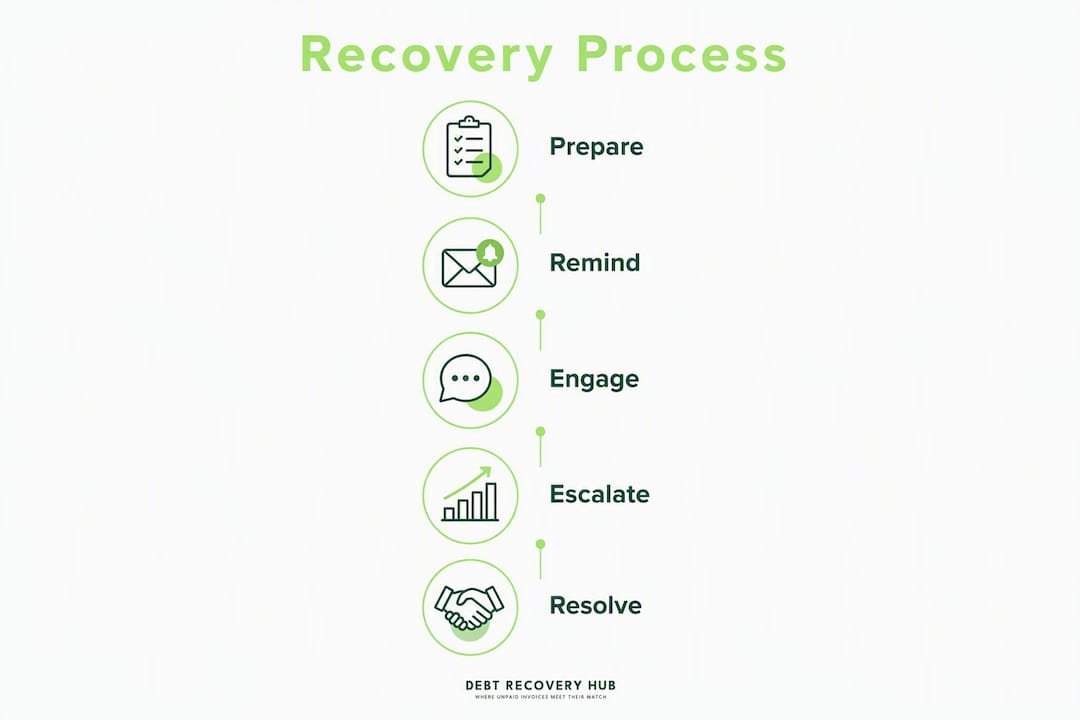
Pre-action preparation
Before sending a single reminder, get the paperwork right. An accurate arrears ledger, copies of the demand notices, proof of service (ideally recorded delivery or email with read receipt), and the relevant lease clauses are the foundation of any subsequent legal action. If the summary of rights was required and was not issued, remedy that first.
Recommended reminder cadence
| Stage | Timing | Action |
|---|---|---|
| First reminder | ~14 days after due date | Polite written reminder; confirm amount and payment details |
| Second reminder | — | Firmer tone; note that further action may follow |
| Letter before claim | — | Formal pre-action letter; set 14-day deadline to pay or engage |
| County court claim | — | Issue claim if no engagement or payment plan agreed |
- Issue accurate demands — ensure each demand complies with the lease and includes the statutory summary of leaseholders’ rights where required.
- Document every step — keep a dated file of all correspondence, calls, and payment receipts.
- Offer a payment plan — document any arrangement in writing, including the instalment amounts, dates, and what happens on default.
- Consider tribunal referral — if the leaseholder disputes the charge, a First-tier Tribunal determination on reasonableness can clarify the recoverable sum before court action.
- Instruct a specialist — if the leaseholder is unresponsive after the letter before claim, the balance is material, or there have been repeated defaults, instruct a solicitor or a specialist debt collection service.
Pro Tip: Recovery costs (solicitor’s fees, court fees) may be recoverable under the lease’s administration charge provisions, but only if the lease expressly permits it. Check the clause before adding costs to the account — a tribunal can disallow charges added without a contractual basis.
When handing a case to a solicitor or recovery agency, prepare: a full arrears ledger, the relevant lease extract (particularly the charging and interest clauses), copies of all demands and reminders, any correspondence from the leaseholder, and details of any previous payment arrangements.
How leaseholders can dispute or defend a service charge claim
If you believe a charge is wrong, unreasonable, or improperly levied, you have real options. The key is to act quickly and in writing.
Immediate steps:
- Request a formal statement of account and a breakdown of all costs.
- Ask for copies of invoices, contracts, and any Section 20 consultation paperwork for major works.
- Check whether the landlord complied with consultation requirements; failure to consult limits recovery to £250 per leaseholder for the relevant works.
- Review the lease to confirm the charge is within the scope of what the landlord is entitled to recover.
“The Leasehold Advisory Service recommends disputing unreasonable charges, but warns that tribunal costs can outweigh the disputed sums. Negotiation or paying under protest can therefore be more pragmatic in lower-value cases.” — Leasehold Advisory Service
The First-tier Tribunal (Property Chamber) is the correct forum for most service charge disputes. It can determine whether a charge is reasonable, whether it was properly demanded, and in what amount it is payable. Tribunal fees are relatively modest, and each party generally bears their own costs, which makes it accessible. County court is an alternative route but tends to be slower and more expensive.
A practical checklist for leaseholders assembling a defence:
- Copies of all demands received and dates of receipt.
- Your own payment records and bank statements.
- Any correspondence with the landlord or agent about the charge.
- Section 20 consultation notices (or evidence they were not served).
- Notes of any verbal conversations, with dates and names.
For free advice, contact the Leasehold Advisory Service (LEASE), Citizens Advice, or Shelter. All three offer guidance specific to England and Wales without charge.
Selling or remortgaging when you have service fee debt
Arrears do not automatically block a sale or remortgage, but they complicate both. Conveyancers and lenders will find out, and they will want the matter resolved.
On a sale:
- The buyer’s solicitor will raise enquiries about service charge arrears as a standard part of the conveyancing process.
- Selling a leasehold property with arrears is possible, but buyers normally require the seller to settle the debt at completion or provide a solicitor’s undertaking to clear it.
- If the sale proceeds are insufficient to cover the arrears, options include settling from other funds, negotiating a reduced settlement with the landlord or RMC before exchange, or in some cases agreeing a retention from the sale price.
- Unresolved arrears can delay exchange and, in a chain, risk the entire transaction.
On a remortgage:
- Lenders will check the leasehold title and may require confirmation from the managing agent that no arrears exist.
- Some mortgage lenders may choose to pay outstanding service charge arrears to protect their security, adding the sum and administration fees to the mortgage balance. This resolves the immediate problem but increases the outstanding mortgage.
Practical checklist for sellers and managing agents:
- Obtain a current statement of account showing the arrears figure before marketing the property.
- Notify the managing agent early that a sale is planned; they will need to respond to management information requests promptly.
- Consider settling arrears before exchange to avoid last-minute delays.
- Where a property carries outstanding debts, take legal advice on the implications for title and any buyer protections required.
Limitation periods, statutory thresholds, and recoverable costs
Timing matters more than most people realise. Two sets of rules govern when certain remedies are available and how far back a landlord can go.
Forfeiture and Section 146 thresholds
A landlord cannot validly serve a Section 146 notice for forfeiture unless the statutory conditions under the Law of Property Act 2002, section 167 are met. In practice, the commonly cited thresholds are:
- The arrears exceed the statutory threshold set by law, or
- The arrears include a sum that has been outstanding for more than the statutory period allowed by law.
Both conditions must be assessed carefully before a Section 146 notice is served. Forfeiture is legally complex and high-risk; a notice served prematurely or without meeting the statutory conditions is invalid and can expose the landlord to costs.
Limitation and typical timescales
Under the Limitation Act 1980, the standard limitation period for a contract claim is six years from the date the debt fell due. For service charge arrears, this means a landlord can in principle pursue debts going back six years, though older debts become harder to evidence and courts may take a dim view of delay.
Costs and interest
| Item | Rule |
|---|---|
| Interest on arrears | Lease rate if specified; court rate if not |
| Administration charges | Recoverable only if the lease expressly permits them |
| Legal costs | Recoverable under the lease’s costs clause; tribunal can limit or disallow |
| Section 146 notice costs | Recoverable if the notice is valid and the lease permits |
| Tribunal cost awards | Each party usually bears own costs; tribunal rarely awards costs against either side |
Key figure: The commonly applied statutory threshold before a Section 146 forfeiture notice can be served is £350 in arrears or a debt more than three years old, per section 167 of the Law of Property Act 2002.
When should you use a professional debt recovery service?
Not every arrears case needs a solicitor or a specialist agency from day one. But there are clear triggers that make professional involvement the sensible call.
Use a specialist when:
- The debt exceeds a few hundred pounds and the leaseholder has not responded to reminders.
- The case involves multiple leaseholders in arrears, creating a cash-flow problem for the building.
- The leaseholder has disputed the charge and the dispute is unresolved after initial correspondence.
- There have been repeated defaults on previous payment arrangements.
- The arrears are approaching or have exceeded the forfeiture thresholds, and you need to understand your options.
- You lack the time or expertise to manage the legal process in-house.
Debtrecoveryhub connects landlords, managing agents, and RMC directors with vetted debt collection agencies that specialise in property-related debts. Rather than approaching agencies blind, the platform matches your case to an agency based on the debt type, amount, age, and location, which means the agency you speak to has relevant experience from the outset. You can explore the platform’s debt collection services to understand how the matching process works.
Before making a referral, prepare the following:
- A full arrears ledger showing the debt history and current balance.
- The relevant sections of the lease (charging clause, interest provisions, costs clause).
- Copies of all demands, reminders, and any correspondence from the leaseholder.
- Details of any previous payment arrangements and whether they were honoured.
- Any tribunal or court documents if proceedings have already begun.
After referral, expect an initial assessment of the case, a proposed recovery route, and an outline of likely timescales and fee structures. Agencies working through Debtrecoveryhub operate on an ethical, outcome-focused basis, which matters particularly where the leaseholder may be in financial difficulty or protected under breathing space rules.
Pro Tip: Early engagement with a vetted agency often reduces the net legal spend compared with late litigation. The longer a debt sits unaddressed, the more it costs to recover, and the harder it becomes to evidence older billing periods.
Key takeaways
Service charge arrears are enforceable under English and Welsh law, and both leaseholders and managing agents benefit from acting early, documenting everything, and seeking specialist help before costs escalate.
| Point | Details |
|---|---|
| Check the lease first | The lease is the source of the payment obligation; confirm the charging clause, interest rate, and costs provisions before acting. |
| Forfeiture thresholds apply | A Section 146 notice requires arrears exceeding £350 or a sum outstanding for more than three years under the Law of Property Act 2002. |
| Six-year limitation period | Under the Limitation Act 1980, landlords can pursue arrears going back up to six years from the date each sum fell due. |
| Free advice is available | LEASE, Citizens Advice, and Shelter all offer free guidance for leaseholders in England and Wales. |
| Debtrecoveryhub for specialist referral | Debtrecoveryhub matches landlords and agents with vetted agencies by debt type, amount, and location for efficient, ethical recovery. |
The part most guides skip over
Most articles on service charge arrears treat the problem as binary: either the leaseholder pays, or the landlord litigates. The reality is messier, and the middle ground is where most cases actually resolve.
The agents and RMC directors who handle arrears well share one habit: they treat the first missed payment as a communication problem, not a legal one. A leaseholder who misses a payment in January and gets a polite call or letter in February will almost always engage. The same leaseholder who receives a formal letter before claim in April, having heard nothing in between, is now defensive, sometimes hostile, and far more likely to dispute the charge as a tactical response.
There is also a caution worth stating plainly. Aggressive pursuit of arrears where the leaseholder is in genuine financial hardship, a mental-health crisis, or protected under the Debt Respite Scheme is not just ethically questionable; it can backfire legally. Courts and tribunals notice disproportionate conduct, and a costs award against a landlord who pushed too hard is not unheard of.
The practical wisdom is this: document everything, communicate early, offer a realistic payment plan, and reserve legal action for the cases where engagement has genuinely failed. That approach recovers more money, faster, and at lower cost than the aggressive route almost every time.
Debtrecoveryhub: a faster route to the right recovery agency
When service charge arrears have passed the point of internal management, the next question is which agency to instruct. The wrong choice wastes time and money; a specialist with no property experience will struggle with lease-based obligations and tribunal procedures.

Debtrecoveryhub takes the guesswork out of that decision. The platform matches landlords, managing agents, and RMC directors with vetted agencies based on the specific details of the case: the debt amount, its age, the type of property, and the recovery steps already taken. You are not handed a generic list; you get a tailored referral to an agency that handles cases like yours regularly.
Before you submit a case, pull together your arrears ledger, the relevant lease extract, and copies of previous correspondence. The more complete the picture, the better the match. Once submitted, you will receive an initial assessment and a proposed route, with a clear outline of timescales and fee structures.
To get started, visit Debtrecoveryhub’s debt collection platform and submit your case details. The process is straightforward, and there is no obligation until you accept a referral.
Useful sources for England and Wales
These are the primary and authoritative resources for anyone dealing with residential charge arrears in England and Wales:
- GOV.UK — Leasehold property: service charges and other expenses: the government’s own plain-language guide to leaseholder rights, including the right to request accounts and challenge charges.
- Leasehold Advisory Service (LEASE): free, independent advice for leaseholders and landlords; covers what happens if you do not pay and how to challenge charges.
- First-tier Tribunal (Property Chamber): the correct forum for most service charge disputes in England; explains how to apply and what to expect.
- Shelter — repossession of leasehold property: detailed legal guidance on enforcement routes, including forfeiture and county court action.
- Law of Property Act 2002, section 167: the primary legislation setting out the statutory conditions for serving a Section 146 forfeiture notice.
- Landlord and Tenant Act 1987, section 42: the statutory basis for the trust account requirement for service charge funds.
- Limitation Act 1980: sets the six-year limitation period for contract claims, including service charge arrears.
- The Property Institute — advice note on service charge arrears: practical guidance for block managers on running a structured recovery process.
FAQ
What is the time limit for claiming service charge arrears?
Under the Limitation Act 1980, the standard limitation period for a contract claim is six years from the date each sum fell due. Landlords can pursue arrears going back up to six years, though older debts are harder to evidence.
What does “service charge in arrears” mean?
It means the leaseholder has not paid a service charge by the date it fell due under the lease. The unpaid sum, plus any interest or administration charges permitted by the lease, forms the arrears balance.
Do you legally have to pay service charges in England and Wales?
Yes, if your lease requires it. The obligation to pay flows from the lease, not from statute. Refusing to pay does not extinguish the debt; it triggers the landlord’s enforcement rights, including county court action and, in extreme cases, forfeiture.
Can you sell a property with service charge arrears?
Yes, but the arrears will need to be addressed at or before completion. Buyers’ solicitors routinely require the seller to clear the debt at completion or provide a solicitor’s undertaking to do so. Unresolved arrears can delay or derail a sale.
When can a landlord start forfeiture proceedings for arrears?
A landlord can only serve a valid Section 146 forfeiture notice once the arrears exceed £350 or a sum has been outstanding for more than three years, per section 167 of the Law of Property Act 2002. Forfeiture is a last resort and courts treat it as such.