

Why Consumer Duty Debt Collection Needs More Than Cure Rate
Related Guides
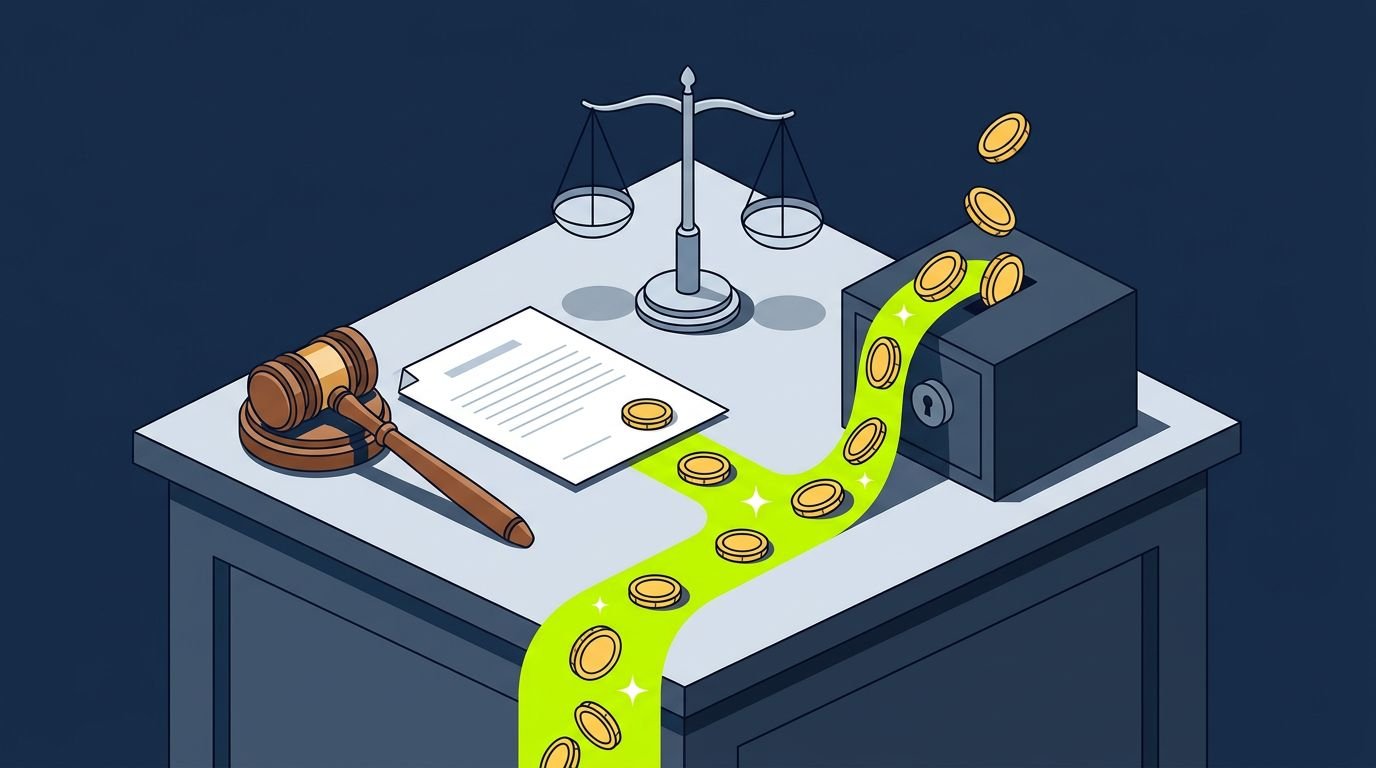



A high cure rate can look reassuring while customers are being pushed into repayment plans they cannot sustain. Consumer Duty debt collection changes what you need to ask of a collections process, particularly when your firm is FCA-authorised or acts for a regulated creditor.
Cash recovery still matters. However, the FCA expects firms to monitor whether customers receive good outcomes, identify harm, and act when their evidence shows a problem. That makes a narrow recovery dashboard hard to defend.
Key Takeaways
- Cure rate measures whether arrears have ended or improved, but your definition may hide repeat arrears, unaffordable plans, or harmful contact practices.
- Consumer Duty does not mandate one KPI set. You need management information that fits your products, customers, distribution model, and collections activities.
- A balanced dashboard should combine recovery, affordability, customer support, vulnerability, complaints, and third-party performance.
- Targets can create poor incentives when agents receive rewards for short-term cures, payments taken, or calls completed without outcome controls.
- If you outsource collections, you remain responsible for understanding the customer outcomes associated with your chosen debt recovery agency.
Why Consumer Duty debt collection changes the question behind performance
Consumer Duty applies to FCA-regulated firms and focuses on whether retail customers receive good outcomes. The FCA’s framework includes a Consumer Principle, cross-cutting rules, and four outcome areas: products and services, price and value, consumer understanding, and consumer support.
For collections leaders, consumer support often becomes the most visible pressure point. You need to make it reasonably easy for a person in financial difficulty to contact you, explain their circumstances, and receive appropriate help. The standard is not met by recording that a call was answered or a letter was sent.
The FCA states that firms should monitor and regularly review outcomes, identify groups receiving poor outcomes, understand why, and take action. Its Consumer Duty resources also make clear that firms need evidence, not broad assurances. Management information should show whether a process works in practice.
This does not mean every creditor or collector needs the same dashboard. A credit-card portfolio, motor-finance book, and specialist debt purchaser face different products, customer needs, and risks. The FCA does not prescribe a universal cure-rate threshold, contact cap, or vulnerability target.
Instead, you need a defensible answer to several practical questions:
- What does a good outcome look like for customers in arrears on your product?
- Which groups might experience worse outcomes, and how would you spot that?
- What happens after a repayment arrangement starts?
- Does your collections strategy reduce arrears without causing foreseeable harm?
- Can senior management see the evidence and challenge the response?
A collections result is incomplete when it shows money received but cannot show whether the arrangement was understood, affordable, and sustained.
That shifts the unit of measurement. A case should not be regarded as successful merely because the balance temporarily falls. You need to know what happened to the customer afterwards.
What cure rate measures, and what it can conceal
Cure rate usually means the proportion of accounts that leave arrears or return to an agreed payment status during a stated period. Some firms count a cure when the customer becomes contractually up to date. Others count a payment arrangement, an agreed settlement, or a move to a less severe arrears bucket.
That variation matters. Before comparing teams, agencies, or portfolios, you need a written definition covering the denominator, reporting period, exclusions, and point at which an account is considered cured.
A simple monthly formula might be:
Cure rate = accounts that meet the defined cure condition during the month / eligible accounts in arrears at the start of the month
The formula is useful because it shows movement through arrears. It can reveal whether early intervention works and whether a particular strategy prevents cases from deteriorating. For a creditor under pressure to reduce overdue balances, it also provides a clear operational signal.
Yet cure rate has blind spots.
An account may cure because the customer borrows elsewhere, misses essential household bills, or accepts a payment plan that leaves no margin for the next unexpected cost. The account can then fall back into arrears after the reporting window closes. A high result can also reflect a practice of prioritising easy-to-cure accounts while customers with complex needs wait longer for help.
Similarly, an agent may secure a first payment by setting a figure above the customer’s sustainable budget. If the scorecard rewards the first payment alone, the agent has little reason to test affordability carefully. The customer experiences repeated contact and escalating stress. Your firm later incurs more handling cost and faces a weaker evidence trail.
You should therefore pair cure rate with cure durability. Measure how many cured accounts remain current after 30, 60, or 90 days, using periods that fit your product and arrears cycle. Also examine repeat arrears within six or 12 months where the product life supports that analysis.
A lower immediate cure rate can be acceptable if it reflects more realistic arrangements and fewer repeat defaults. You should not treat it as proof of success on its own, but it can be a better customer outcome than a fast, fragile cure.
How narrow targets can distort debt collection behaviour
Every target tells people what the organisation values. When the dominant measure is cash collected, cases cured, or calls completed, staff can learn to chase the number rather than the underlying outcome.
This risk rises when variable pay, leaderboards, or supplier fees depend heavily on short-term recovery. Even well-trained people respond to the measures that affect their appraisal, commission, or contract renewal.
Consider the effects of common targets:
| Target used alone | Likely pressure created | Customer risk |
|---|---|---|
| Monthly cure rate | Secure an arrangement quickly | Plans may be unaffordable or poorly understood |
| Cash collected | Prioritise immediate payment | Essential expenditure may be overlooked |
| Calls per hour | Keep conversations short | Vulnerability or financial difficulty may go unexplored |
| Promise-to-pay rate | Obtain a commitment | Customers may agree to end contact |
| Low complaint volume | Avoid formal complaints | Dissatisfaction may be hidden rather than resolved |
A metric is not automatically harmful. The problem appears when it becomes the main route to reward and carries no counterweight. Your quality assurance, coaching, and remuneration controls should test for that pressure.
For example, contact productivity can help you manage capacity. However, it should sit beside measures of successful contact, appropriate support, call quality, complaint themes, and repayment-plan sustainability. A collector who spends longer with a customer may deliver a better outcome than one who ends ten rapid calls.
The same principle applies to communications. Excessive messages can become counterproductive when a customer has not engaged, has asked for another channel, or is in financial difficulty. The UK regulators’ joint work on debt collection has stressed supportive language, suitable contact frequency, timely support, and clear access to free debt advice.
Review scripts, texts, letters, and automated journeys through the eyes of a customer under strain. Can they identify the creditor? Do they understand the balance and next step? Can they ask for breathing room, explain a problem, or involve a debt adviser without friction?
You should also check for unequal effects. A channel that works for many customers may disadvantage people with communication needs, limited digital access, language barriers, or poor mental health. Aggregate performance often masks those patterns.
A balanced Consumer Duty debt collection scorecard
A useful scorecard tracks commercial performance and customer outcomes together. It does not turn every case into a lengthy review. Instead, it gives you early warning where recovery activity may be creating avoidable harm or failing particular customer groups.
The example below is a starting point. You should adjust definitions, thresholds, cadence, and segments for your firm.
| Area | Measures you could monitor | What the measure can reveal |
|---|---|---|
| Recovery and arrears | Cure rate, cash collected, aged-debt reduction, time in arrears | Whether recovery activity reduces outstanding balances |
| Sustainable outcomes | 30-, 60-, and 90-day cure durability, broken arrangements, repeat arrears | Whether customers can maintain the solution agreed |
| Affordability and support | Arrangement reviews, forbearance offers, payment-plan changes, debt-advice referrals | Whether staff identify and respond to financial difficulty |
| Customer understanding | Contact-to-resolution rate, customer feedback, letter and digital-journey testing | Whether customers understand their balance, options, and next action |
| Vulnerability | Identification rates, outcomes by vulnerability characteristic, reasonable-adjustment use | Whether support is reaching customers who may need it |
| Conduct and quality | File-review results, call-quality findings, upheld complaints, remediation cases | Whether staff conduct meets your policy and expected standards |
| Communications | Contact attempts per account, channel mix, opt-outs, response patterns | Whether contact frequency and channel choice are proportionate |
| Third-party oversight | Agency cure durability, complaints, quality scores, subcontractor controls | Whether outsourced activity produces acceptable outcomes |
A dashboard needs segmentation as well as totals. Break results down by arrears age, product, contact channel, payment method, arrangement type, and customer group where lawful and appropriate. If the overall cure rate is stable but customers identified as vulnerable have higher broken-plan rates, the total has concealed a material issue.
Avoid using identification rates as a simple performance contest. A rising vulnerability figure might reflect better conversations and recording. A falling figure might mean staff have stopped asking useful questions. Context, case sampling, and customer feedback matter.
The same care applies to complaints. Fewer complaints may indicate a better process. It may also mean people cannot find the complaints route, staff resolve issues informally without recording themes, or customers have disengaged. Pair volume with root causes, resolution quality, repeat complaints, and evidence from file reviews.
A recognised issue needs an owner, a due date, and a way to verify that the fix worked. Recording a problem without testing the remedy gives senior leaders little assurance.
Build evidence that can withstand challenge
Consumer Duty monitoring is not a monthly spreadsheet exercise. You need a clear chain from the expected customer outcome to the data you collect, the decision you make, and the action you take.
Start by defining the good outcome for each arrears pathway. For an early-stage borrower, that may mean clear information and a payment option that reflects their circumstances. For a customer in persistent financial difficulty, it may mean forbearance, specialist support, or a referral to free debt advice. The appropriate outcome depends on the facts.
Next, combine numerical data with evidence that explains the numbers. FCA-focused guidance on Consumer Duty requirements highlights the need for ongoing monitoring, evidence, and remediation where issues arise. A dashboard alone cannot show why an outcome occurred.
Your evidence pack may include:
- Call and case-file sampling that tests affordability discussions, explanations, and outcomes.
- Complaint analysis that groups recurring issues by root cause, agent, process, channel, or supplier.
- Customer research and journey testing, including feedback from people who did not complete a plan.
- Training, competence, and quality-assurance records that show whether staff can apply policy.
- Action logs that show who approved a change, when it went live, and whether it improved results.
Retain the underlying records. The FCA expects firms to be able to provide outcomes-monitoring evidence on request. Its guidance also expects governing bodies to review Consumer Duty assessments at least annually, challenge the evidence, and agree actions where risks emerge.
Your board report should not rely on green status labels. Explain the customer outcome, scope of the issue, affected groups, root cause, proposed remedy, owner, and follow-up date. If the data is incomplete, say so and set out how you will close the gap.
Independent checks help here. A second-line compliance review, internal audit, or structured review of agency files can test whether operational reporting matches customer reality. Evidence practices for Consumer Duty monitoring also highlight the value of combining management information with complaints, quality results, and customer feedback.
What this means when you outsource collections
Outsourcing does not remove your need to understand outcomes. If an external collector contacts your customers, their scripts, payment-arrangement practices, complaint handling, and data quality can affect your own Consumer Duty evidence.
Before appointment, ask a prospective debt recovery agency how it defines cure rate, tests affordability, records vulnerability, and monitors broken arrangements. Request sample management information. It should show more than recovered cash and closed files.
Your contract and review meetings should cover quality standards, customer-support expectations, complaint escalation, audit access, data fields, subcontracting, and remediation. Agree the contact strategy and escalation points before cases transfer. Then test whether day-to-day handling follows the agreement.
For commercial unpaid invoices, the position can differ. B2B debt recovery usually concerns businesses rather than retail consumers, so Consumer Duty may not apply directly to that invoice collection activity. Still, the discipline has value. You benefit from accurate case records, proportionate communications, clear dispute handling, and agency reporting that explains what happened rather than reporting cash alone.
If you need help choosing a provider for an unpaid invoice, Debt Recovery Hub can match you with a suitable specialist based on the debt’s type, value, age, and complexity. A responsible approach to debt recovery UK cases protects commercial relationships and gives you clearer control over escalation.
Set targets that reward durable results
You do not need to abandon cure rate. You need to stop treating it as the final verdict on collections quality. Keep it as one measure within a framework that makes poor customer outcomes visible.
Set minimum quality gates around any performance reward. For example, an agent’s recovery result should not qualify for incentive payment if sampling finds unsupported affordability assessments, poor explanations, missed vulnerability indicators, or inappropriate pressure. Agency scorecards can use the same safeguards.
Review trade-offs openly. A reduction in immediate collections may follow a change that produces more affordable arrangements. A short-term increase in average handling time may follow better specialist referrals. You should test whether these changes reduce broken plans, complaints, repeat arrears, and avoidable contacts over time.
When reporting is clear, you can make informed choices rather than reacting to a single percentage. That is the practical standard Consumer Duty debt collection demands: demonstrate that recovery methods work for the business without losing sight of the people affected.
Conclusion
Cure rate still tells you something useful, but it cannot tell you whether a customer has reached a stable and fair resolution. A narrow recovery target can reward activity that looks productive in the month and fails the customer soon after.
A strong Consumer Duty debt collection scorecard joins commercial results with affordability, support, understanding, vulnerability, conduct, and cure durability. When those measures point in different directions, your review process should show how you assessed the trade-off and what you changed.
Category :
Share :