

Commercial payments bill UK: Everything you need to know
Related Guides
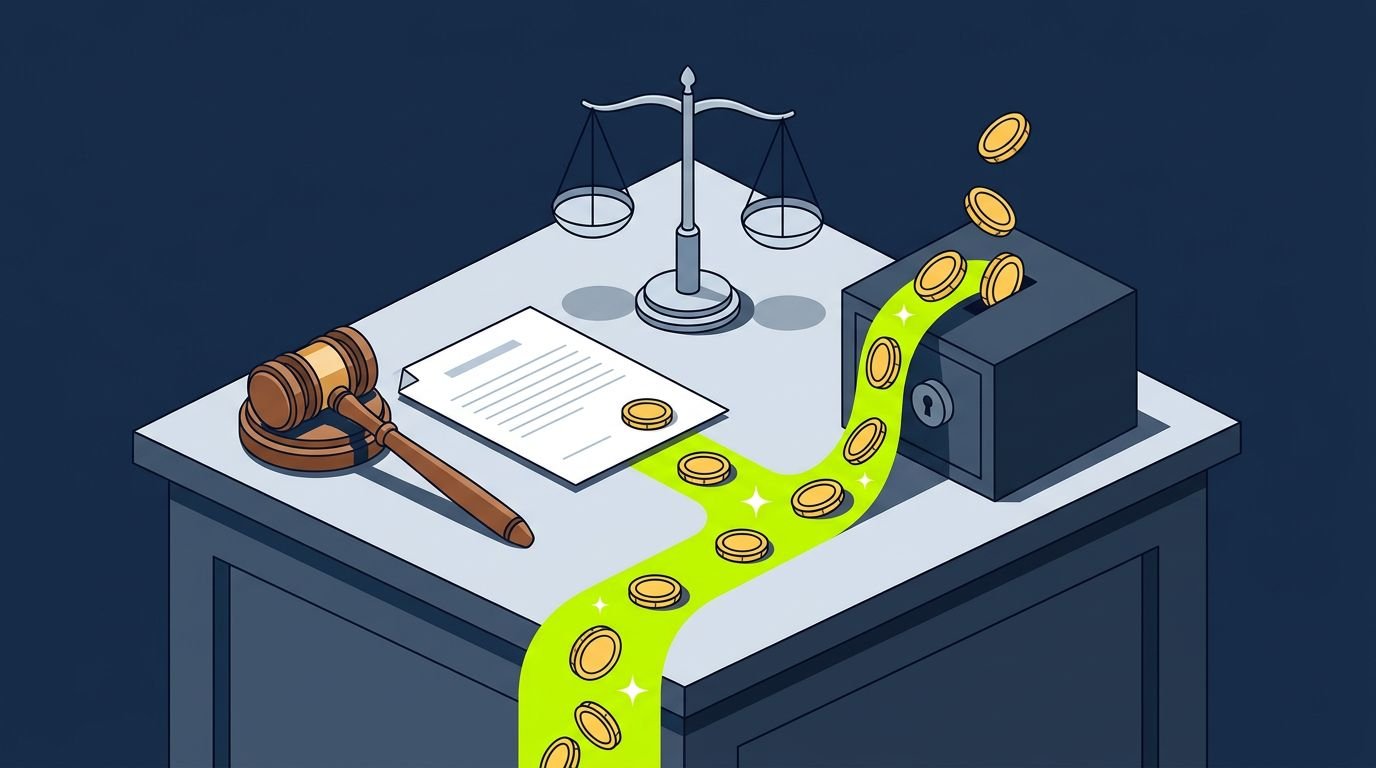


If you run a small business in the UK and you are tired of chasing invoices that should have been paid weeks ago, the Commercial Payments Bill is worth your attention. In short, it introduces a legal cap of 60 days on payment terms in most business-to-business contracts, makes statutory interest of 8% above the Bank of England base rate mandatory on late payments, bans the withholding of retention money in construction, and hands the Small Business Commissioner real teeth to fine persistent late payers up to 1% of their annual UK turnover. The bill was introduced in the House of Lords on 19 May 2026 and is still working its way through Parliament, so nothing has come into force yet. This article walks you through what is actually in it, when it might land, and what you can do in the meantime to keep your cash flow healthy.
Table of Contents
- What the Commercial Payments Bill is
- Why the government is doing this now
- The five main changes at a glance
- The 60-day cap on payment terms
- Mandatory interest on late payments
- Disputed invoices and the new fixed sum
- The retention ban in construction
- Stronger powers for the Small Business Commissioner
- New reporting duties for large companies
- When will the bill become law
- What you should do now
- Frequently asked questions
What the Commercial Payments Bill is
The Commercial Payments Bill is a piece of proposed UK legislation designed to tackle late payment between businesses. You may also have seen it called the Small Business Protections (Late Payments) Bill, which is the working name some legal commentators picked up early on. It started life in the House of Lords, sponsored by the Department for Business and Trade, and it carries forward commitments the government first set out in the 2024 King’s Speech.
The core idea is simple. Larger companies have, for years, treated their smaller suppliers as a free source of credit by paying slowly. The bill tries to shift the balance back towards the supplier. It does this partly by changing the rules that already exist under the Late Payment of Commercial Debts (Interest) Act 1998, and partly by creating new duties and new enforcement powers that did not exist before.
You can read the government’s own plain-English summary in the Commercial Payments Bill overview on GOV.UK, which is a useful reference point if you want the source rather than someone else’s interpretation of it.
It is worth being clear about one thing straight away. This is a bill, not an Act. Until it completes its passage through both Houses and receives Royal Assent, the rules described here are proposals. They can still change. I will come back to timing later, because it matters for how you should react.
Why the government is doing this now
The numbers behind this are not small. According to the government, late payments cost the UK economy around £11 billion every year, and roughly 38 UK businesses close their doors every single day partly because of cash flow problems tied to being paid late. Those are the figures ministers have used repeatedly to justify the bill, and they are the reason it has cross-party sympathy.
Small and medium-sized enterprises are the ones carrying the weight. SMEs made up 99.9% of the UK’s 5.7 million private sector businesses at the start of 2025, and evidence given to the House of Commons Business and Trade Committee suggested that around 44% of invoices from SMEs are paid late. If you have ever run a small firm, that statistic will not surprise you at all. You do the work, you send the invoice, and then you wait. Sometimes you wait so long that you end up borrowing money to cover wages while a much larger customer sits on cash that is rightfully yours.
Here is a concrete example of how that plays out. Imagine you are a small marketing agency in Manchester. You finish a £20,000 project for a national retailer in January. Their standard terms say 90 days, so on paper you will not see the money until April. In practice their finance team queries a line on the invoice in March, resets the clock, and you are not paid until June. Five months of your money is funding their working capital, not yours. That is the exact scenario the bill is built to stop.
The government describes the reforms as the most significant action on late payments in more than 25 years, and has claimed the resulting regime would be the toughest in the G7. Whether it lives up to that billing is something we will only know once it is in force and being enforced.
The five main changes at a glance
Before we go into detail, here is the whole thing in one table so you can see the shape of it. If you only read one section, read this one.
| Change | What it does | Who it mainly affects |
|---|---|---|
| 60-day payment cap | Sets a maximum payment term of 60 days in most B2B contracts, with strictly limited exemptions | Suppliers dealing with larger purchasers |
| Mandatory statutory interest | Interest of 8% above the Bank of England base rate applies to late payments and cannot be contracted away | Any business paid late |
| Fixed sum for late disputes | Suppliers can claim a fixed sum where a purchaser raises a dispute late or without enough information | Suppliers facing stalling tactics |
| Retention ban in construction | Prohibits deducting and withholding retention money under construction contracts | Contractors and subcontractors |
| Stronger Small Business Commissioner | New powers to adjudicate disputes, investigate poor payers, and fine up to 1% of annual UK turnover | Persistent late-paying large firms |
Now let us take each of these in turn.
The 60-day cap on payment terms
The headline measure is a statutory maximum payment term of 60 days for commercial contracts within scope, which broadly means business-to-business contracts for the supply of goods and services. At present there is no hard legal ceiling on how long a purchaser can take to pay, only a set of default rules that apply if a contract is silent. Large buyers have exploited that gap by writing 90-day or 120-day terms into their standard contracts and daring smaller suppliers to object.
The cap changes the starting point. Under the bill, a payment term longer than 60 days will not stand up in most in-scope contracts. There are strictly limited exemptions. For instance, contracts where both parties are large businesses, or where the purchaser is actually the smaller party, sit outside the core protection because the whole point is to shield the weaker side of the deal.
There is also an important detail about the verification or acceptance period, which is the window a buyer gives itself to check that goods or services meet the contract before the payment clock starts. The bill treats that checking period as completed within 30 days unless it is genuinely fair and reasonable for longer to apply. That closes a loophole, because a long verification window is one of the classic ways buyers used to stretch the real payment date well beyond the headline term.
If your business regularly agrees to long terms just to win work from big customers, this is the provision that changes your negotiating position most. You can point to the law rather than your own bargaining weakness. Firms that specialise in commercial debt recovery already spend a lot of their time unwinding exactly these delays, and a statutory cap gives them a cleaner legal footing to work from.
Mandatory interest on late payments
Statutory interest is not new. The Late Payment of Commercial Debts (Interest) Act 1998 has let businesses charge interest on overdue commercial debts for more than 25 years. The problem has always been that many suppliers never actually charge it, partly for fear of damaging the relationship, and partly because contracts sometimes substituted a lower rate or removed the entitlement altogether.
The bill makes the statutory rate mandatory. It sets interest at 8% above the Bank of England base rate on late payments in commercial contracts, and it stops that entitlement being watered down or contracted out. In other words, a buyer can no longer bury a clause in their standard terms that swaps the statutory rate for something trivial.
To put a figure on it, suppose the Bank of England base rate sits at 4%. That gives you a statutory interest rate of 12% a year on the overdue amount. On a £20,000 invoice paid three months late, that is roughly £600 in interest. You can check the current base rate on the Bank of England website to work out what the rate would be at any given moment, since the 8% margin sits on top of whatever the base rate happens to be.
There is a wider point here about culture. The reason many small firms never charge interest is that they worry a big client will simply take their future business elsewhere. Making the rate mandatory does not remove that fear entirely, but it does normalise the idea that late payment has a price attached. If you want to understand how to apply interest and compensation properly, the guidance on charging interest on late commercial payments is a sensible place to start before you send anything to a customer.
Disputed invoices and the new fixed sum
One of the oldest tricks in the late-payment playbook is the convenient dispute. An invoice falls due, and suddenly the buyer raises a vague query about it, which resets everyone’s expectations and buys them weeks of extra time. Sometimes the query is legitimate. Often it is not.
The bill tackles this with a new implied term. If a purchaser raises a dispute late, or raises it without providing sufficient information about what is actually being disputed, the supplier becomes entitled to recover a fixed sum. The aim is to make stalling expensive rather than free. A buyer who wants to challenge an invoice will need to do it promptly and set out proper detail, or accept a financial consequence.
This interacts with the verification period mentioned earlier. Between the 30-day default checking window and the fixed sum for late or poorly explained disputes, the bill is trying to shut down the two most common tactics for pushing the real payment date back without ever formally breaching the contract.
For sectors where disputed invoices are common, this could be significant. The government has been careful to say it does not want to cut across existing disputes processes, particularly in construction, so the detail of how the dispute window operates will be spelled out further as the bill develops. If you frequently deal with contested invoices, keeping tidy records of what was delivered and when will matter more than ever, because that is the evidence that decides whether a dispute is genuine. A structured approach to recovering unpaid invoices tends to rest on exactly that kind of documentation.
The retention ban in construction
Construction gets its own dedicated measure, and for good reason. Retention is the practice where a portion of money owed, often 3% to 5% of a contract’s value, is held back by the paying party until the work is signed off, sometimes long after the job is finished. In principle it exists to guarantee that defects get fixed. In practice, retention money is frequently held for far too long, released slowly, or lost entirely when a company higher up the chain goes insolvent.
The bill prohibits the deduction and withholding of retention payments under the terms of a construction contract. That is a substantial change for an industry where retention has been standard for decades. The government has said it will consult further on the timing of implementation, which tells you it expects the sector to need a transition rather than an overnight switch.
The House of Commons Business and Trade Committee had already flagged construction as a particular problem area, drawing attention to retention and uncapped liabilities as practices that hit smaller subcontractors hardest. If you are a subcontractor who has ever watched retention money vanish when a main contractor collapsed, you will understand precisely why this clause is in the bill.
Because late payment is a devolved matter in some respects, it is worth noting that Scotland handles parts of this differently, so a Scottish construction firm should check how the final rules extend north of the border before assuming the position is identical everywhere in the UK.
Stronger powers for the Small Business Commissioner
A law without enforcement is just a suggestion. The bill’s answer to that is to substantially expand the role of the Small Business Commissioner, or SBC, which until now has been a fairly limited office with more of an advisory and complaints-handling function than a regulatory one.
Under the bill, the SBC gains three significant powers. First, it can investigate larger businesses suspected of persistently engaging in poor payment practices, make recommendations, and take enforcement action, including issuing directions and imposing financial penalties. Those penalties can reach up to 1% of a company’s annual UK turnover for certain breaches, which for a large firm is a genuinely uncomfortable number. Second, it can adjudicate contractual payment disputes between small and larger businesses outside the court process, and make binding interim decisions. Third, it can take enforcement action against larger businesses that breach their statutory reporting requirements.
The adjudication power is the one small suppliers should care about most. Going to court over an unpaid invoice is slow, costly, and intimidating when the other side is a national company with a legal department. An adjudication route that sits outside the courts and produces binding interim decisions could give you a realistic way to get a determination without betting the business on litigation.
You can read more about the office and its existing work, including the Fair Payment Code, on the Small Business Commissioner website. Even before the new powers arrive, it is a resource worth knowing about.
New reporting duties for large companies
Alongside the enforcement powers, the bill tightens the transparency regime. The UK’s largest companies and limited liability partnerships already have to report on their payment practices, policies, and performance twice a year. The government intends to add to this through secondary legislation.
Two additions stand out. Large companies will need to report the amount of interest they have paid on late payments and the interest they owe, which puts a hard number on how badly they treat suppliers. And where a large company is a persistent late payer, its board or audit committee will have to publish commentary explaining why its payment performance is poor and what it is doing to fix it. That second requirement is designed to embarrass, and reputational pressure at board level can be surprisingly effective.
Here is the table version of who has to do what.
| Duty | Applies to | Nature of the obligation |
|---|---|---|
| Half-yearly payment practices report | Large companies and LLPs | Existing duty, continuing |
| Report interest paid and owed | Large companies and LLPs | New, via secondary legislation |
| Board commentary on poor performance | Persistently late-paying large firms | New, published explanation and remedial actions |
If you supply large customers, these reports are quietly useful to you. Before you agree terms with a big new client, you can look up their published payment record and see how they actually behave, rather than relying on what their sales team promises.
When will the bill become law
This is the question everyone asks, and the honest answer is that no firm date exists yet. The bill was introduced in the House of Lords on 19 May 2026 and had its second reading on 9 June 2026. As of early August 2026 it has been through committee stage in the Lords and reached report stage, but it has not yet moved to the House of Commons. A bill has to clear both Houses and receive Royal Assent before any of it becomes law.
Even after Royal Assent, the provisions will not switch on immediately. The government has been explicit that it will allow an appropriate lead-in time, including a transition period, so that businesses can prepare. Several of the key measures also depend on secondary legislation, which is a separate step that follows the main Act. The retention ban in particular is subject to further consultation on timing.
There is one reassurance worth holding onto. The government has confirmed the measures will not apply retrospectively. Payments, contracts, and disputes will be judged by the rules in force at the time, so an existing contract signed today will not suddenly be rewritten by a law that passes next year.
You can track exactly where the bill stands at any point on the UK Parliament bill page, which is updated as each stage is completed. If you want certainty on timing, that page is the thing to bookmark.
What you should do now
Because the bill is not yet law, the sensible posture is preparation rather than panic. There is plenty you can do today that will pay off whether the bill passes in its current form, a slightly amended form, or is delayed.
Start by reviewing your standard terms. If your contracts routinely allow buyers 90 days or more, you are already on the wrong side of where the law is heading, and there is no reason to wait for legislation to tighten them. Bringing your terms closer to 60 days now signals to customers that slow payment is not something you accept.
Next, get comfortable with statutory interest and compensation. Many small firms have the legal right to charge it and simply never use it. Practising now, on smaller or less sensitive accounts, makes it far easier to apply routinely once the mandatory regime is in place.
Tighten your record-keeping, especially around delivery and acceptance. The bill rewards suppliers who can show precisely what was delivered and when, because that is what defeats a manufactured dispute. Clean records are also the foundation of any successful debt collection for businesses, so this is effort that helps you regardless of what Parliament does.
Finally, know your escalation route before you need it. Understand how the Small Business Commissioner works, keep an eye on which of your large customers are published poor payers, and have a plan for what you do when an invoice goes badly overdue. If chasing it yourself is not working, a specialist in outstanding debt recovery can often recover money faster and with less relationship damage than repeated internal reminders ever will.
The table below sums up the practical steps.
| Action | Why it matters | Do it now or later |
|---|---|---|
| Review standard payment terms | Aligns you with the coming 60-day cap | Now |
| Practise charging statutory interest | Normalises a right you already have | Now |
| Improve delivery and acceptance records | Defeats manufactured disputes | Now |
| Learn the Small Business Commissioner route | Gives you an escalation option | Now |
| Monitor large customers’ payment records | Warns you about slow payers before you sign | Now |
Frequently asked questions
Is the Commercial Payments Bill now law in the UK?
No. It is a bill going through Parliament, not an Act. It was introduced in the House of Lords in May 2026 and is still progressing through the legislative stages. Even once it passes, the government has said there will be a lead-in period and a transition before the main measures take effect.
What is the maximum payment term under the Commercial Payments Bill?
The bill sets a maximum payment term of 60 days for most business-to-business contracts within scope, with strictly limited exemptions. It also treats a buyer’s verification or acceptance period as completed within 30 days unless a longer period is genuinely fair and reasonable.
How much interest can I charge on late commercial payments?
Under the bill, statutory interest is set at 8% above the Bank of England base rate, and that entitlement cannot be contracted away. The exact percentage moves with the base rate, so if the base rate is 4%, the statutory rate would be 12% a year on the overdue sum.
Does the bill ban retention in construction?
It prohibits the deduction and withholding of retention payments under the terms of a construction contract. The government has said it will consult further on when this comes into force, so construction firms should expect a transition rather than an immediate change.
What can the Small Business Commissioner do under the new rules?
The Commissioner will be able to investigate persistent poor payers, adjudicate payment disputes outside the courts with binding interim decisions, and impose financial penalties of up to 1% of a company’s annual UK turnover for certain breaches.
Will the bill apply to contracts I have already signed?
No. The government has confirmed the measures will not apply retrospectively. Existing payments, contracts, and disputes will be judged according to the rules in place at the relevant time.
Ready to get paid what you are owed?
You do not have to wait for a new law to start collecting the money your business is owed today. If late-paying customers are squeezing your cash flow, the practical answer is a firm, professional recovery process that protects your customer relationships while getting results. Get in touch with the team at Debt Recovery Hub to talk through your overdue accounts and put a proper recovery plan in place.
Category :
Share :